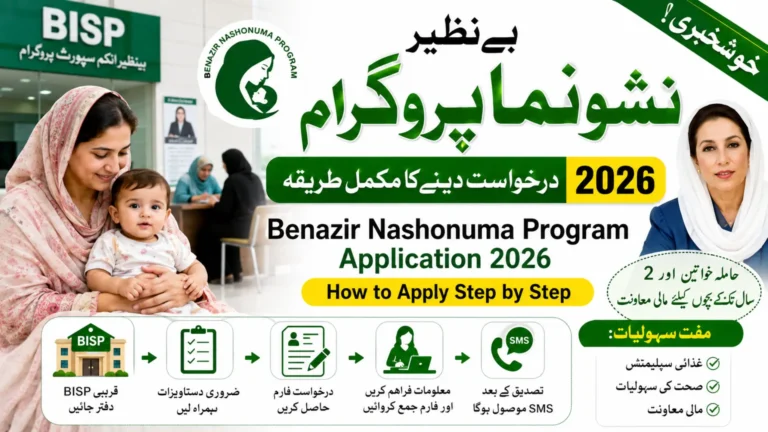
The Benazir Income Support Programme has expanded its flagship health and nutrition initiative, the Benazir Nashonuma Program, to combat stunting and severe malnutrition across Pakistan. Operating in close partnership with the World Food Programme (WFP) and the World Health Organization (WHO), this conditional cash transfer scheme targets the critical first 1,000 days of a child’s life. Low-income families can access dedicated Nashonuma Facilitation Centers established inside Tehsil and District Headquarter Hospitals (THQs and DHQs) to receive specialized nutritional food supplements and additional monetary stipends.
| Program Feature | Key Administrative Details |
|---|---|
| Program Name | Benazir Nashonuma Program 2026 |
| Target Demographic | Pregnant Women, Lactating Mothers, & Infants (6–23 Months) |
| Primary Objective | Stunting Reduction & Maternal Health Improvement |
| Registration Hubs | Dedicated Facilitation Centers at THQ / DHQ Hospitals |
Benefits of BISP Nashonuma Program 2026
Financial Relief and Specialized Nutritional Support
The Nashonuma setup ensures that vulnerable mothers and children receive direct health interventions alongside a specialized cash stipend. The financial payments provided under this framework are entirely separate from, and in addition to, the standard quarterly Benazir Kafaalat cash distributions.
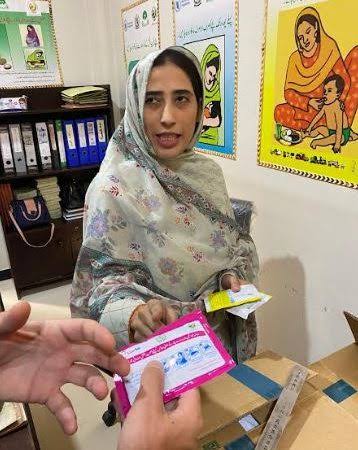
- Nutritional Supplements: Expecting and breastfeeding mothers receive nutrient-packed paste sachets named “Maamta” (pink sachets), while infants receive “Wawamum” (blue sachets) to fill dietary gaps.
- Maternal Healthcare Updates: Registered women get free access to essential antenatal and postnatal checkups, routine growth monitoring, and clinical weight tracking.
- Immunization Coverage: The system monitors and enforces regular vaccination schedules for infants to guard against preventable childhood diseases.
Quarterly Stipend Structure in 2026
Enhanced Financial Allocations for Eligible Beneficiaries
To ease the burden of rising inflation on low-income families, the government announced an updated stipend tier structure. The current quarterly disbursements vary strictly based on the beneficiary category, prioritizing female children to support gender equality in healthcare access.
| Beneficiary Category | Monthly/Quarterly Packages | Enhanced Cash Benefits (PKR) |
|---|---|---|
| Pregnant & Lactating Women | Quarterly Support Supplement | Rs. 3,000 |
| Infant Boy (6 to 23 Months) | Trimonthly Child Allowance | Rs. 3,500 |
| Infant Girl (6 to 23 Months) | Enhanced Trimonthly Allowance | Rs. 4,000 |
Eligibility Criteria for BISP Nashonuma Program
Fundamental Rules for Joining the Nutrition Scheme
- Active Kafaalat Registration: The pregnant or lactating woman must belong to a household actively receiving unconditional cash transfers under the Benazir Kafaalat program.
- Strict Age Limits for Infants: Young children must fall strictly within the age bracket of 6 months to 23 months to qualify for the dietary paste and cash stipends.
- Low Poverty Score Status: The household must have a verified National Socio-Economic Registry (NSER) profile with an approved Proxy Means Test (PMT) score (generally 32 or below).
Registration Process for BISP Nashonuma Program
Step-by-Step Enrollment at Official Facilitation Centers
The registration pathway requires physical verification at local government health facilities to sync health data with the central BISP network.
The Verification Method
- Visit the Local Nashonuma Center
Tehsil or District Hospital
The expecting mother or the mother with her eligible infant must physically visit the dedicated Nashonuma counter located inside the nearest THQ or DHQ hospital. - Document Verification & Medical Screening
Requires CNIC & B-Form
The representative verifies the mother’s original NADRA CNIC and the child’s official B-Form. Medical staff then conduct basic health screenings, including weight and height measurements. - Mandatory Awareness Attendance
Health & Hygiene Session
The female applicant must attend a mandatory on-site awareness seminar covering optimal breastfeeding practices, infant hygiene, and maternal balanced diets. - Biometric Authentication & Food Allocation
90-Day Supply Distribution
Upon successful biometric verification on the terminal, the account is activated. The center dispenses a full 90-day supply of specialized nutrition sachets alongside the cash allocation entry.
Strict Program Compliance Rules
Keeping Your Cash Benefits Active Without Interruption
Critical Vaccination Policy: The EPI vaccination cards of registered infants are verified closely every three months. If parents fail to complete the required immunizations or miss the scheduled quarterly health checkups, the system blocks the child’s Nashonuma cash payments immediately.
Helpline and Support Systems
If you encounter registration errors, missed nutritional supply days, or biometric malfunctions at the hospital counters, reach out through these official support streams.
Support Medium Contact and Tracking Methods Central Toll-Free Helpline 0800-26477 (Free guidance via helpline operators) Official Central Web Portal bisp.gov.pk Grievance Desks On-site BISP Tehsil Offices & Hospital Helpdesks Conclusion
The Benazir Nashonuma Program 2026 remains a powerful asset for enhancing maternal and child health outcomes across the country. By combining quarterly monetary assistance with targeted nutrition packs like Maamta and Wawamum, the initiative directly lowers stunting percentages among vulnerable communities. Beneficiaries must remember to keep their infants’ immunization records updated and complete their dynamic surveys to ensure uninterrupted financial aid.
Frequently Asked Questions (FAQs)
Q1: Can a family not registered in Benazir Kafaalat apply for the Nashonuma program?
No, the mother must be an active beneficiary of the core Benazir Kafaalat cash program to become eligible for Nashonuma nutrition benefits.
Q2: What happens when the registered child reaches 2 years of age?
Once the infant crosses the maximum age limit of 23 months (2 years), the Nashonuma dietary food supply and its specific cash stipend stop automatically.
Q3: Is there any registration fee at the hospital counters?
No, the entire process, including registration, clinical medical screening, and health counseling, is 100% free of charge.
Q4: How often do mothers need to collect the nutrition food packages?
Mothers must visit the designated Nashonuma Facilitation Center every 90 days (three months) to collect their next quarterly quota of food sachets.